
Building a Scalable, Personalized Experience
Built a modular email system using reusable components in Stripo, enabling non-technical teams to create personalized, data-driven campaigns at scale with the help of Moveable Ink.
Context and Goal
At the time, Twitch’s email efforts were mostly static and limited in how much they could reflect each user’s experience on the platform. The Growth team wanted to explore how email could become a more engaging and personalized channel.
I was brought in to help create more visually engaging emails alongside a designer. That worked initially, but as more campaigns and stakeholders got involved, it became clear that the process would not scale.
The goal shifted from simply building better emails to creating a system that could:
Support personalized, data-driven content
Scale across multiple campaigns and teams
Reduce reliance on engineering for every new request
Process
1. Moving Beyond One-Off Builds
Early on, emails were built individually, which created bottlenecks around development and testing. Even with frameworks I had experience with, the process still depended heavily on engineering support.
I started to focus less on individual execution and more on how we could create a repeatable system.
2. Implementing a Modular System in Stripo
We explored different tools and landed on Stripo as a flexible email builder. Within that, I built a set of reusable components that could be used across campaigns.
These components were designed to:
Stay consistent across different email types
Support both light and dark mode for flexibility
Work with internal tracking links and analytics requirements
Integrate with Moveable Ink for dynamic, user-specific content
The goal was to create a foundation that balanced consistency with flexibility.
3. Thinking Through Data and Personalization
A big part of the project was figuring out how to use Twitch data in a way that actually felt meaningful.
I worked with the Growth team to explore what types of data we could surface in emails, including:
Viewing behavior
Favorite channels and categories
Watch time and engagement patterns
This helped shape how the emails were structured and what content made sense to highlight.
4. Prototyping and Iterating in the System
Even though I was not the visual designer, I was closely involved in shaping how designs translated into the system.
I prototyped directly in the email builder, tested layouts, and adjusted content based on feedback from both the Growth team and Moveable Ink. A lot of the work was making sure ideas held up in a real environment and could scale across different use cases.
5. Improving Team Workflow
One of the biggest shifts was enabling the team to work more independently.
By identifying common patterns and turning them into reusable components, I made it easier for non-technical team members to create and update emails on their own. This reduced bottlenecks and made it possible to move faster without sacrificing consistency.
Outcome
The system allowed the team to move from one-off email builds to a more scalable, flexible approach.
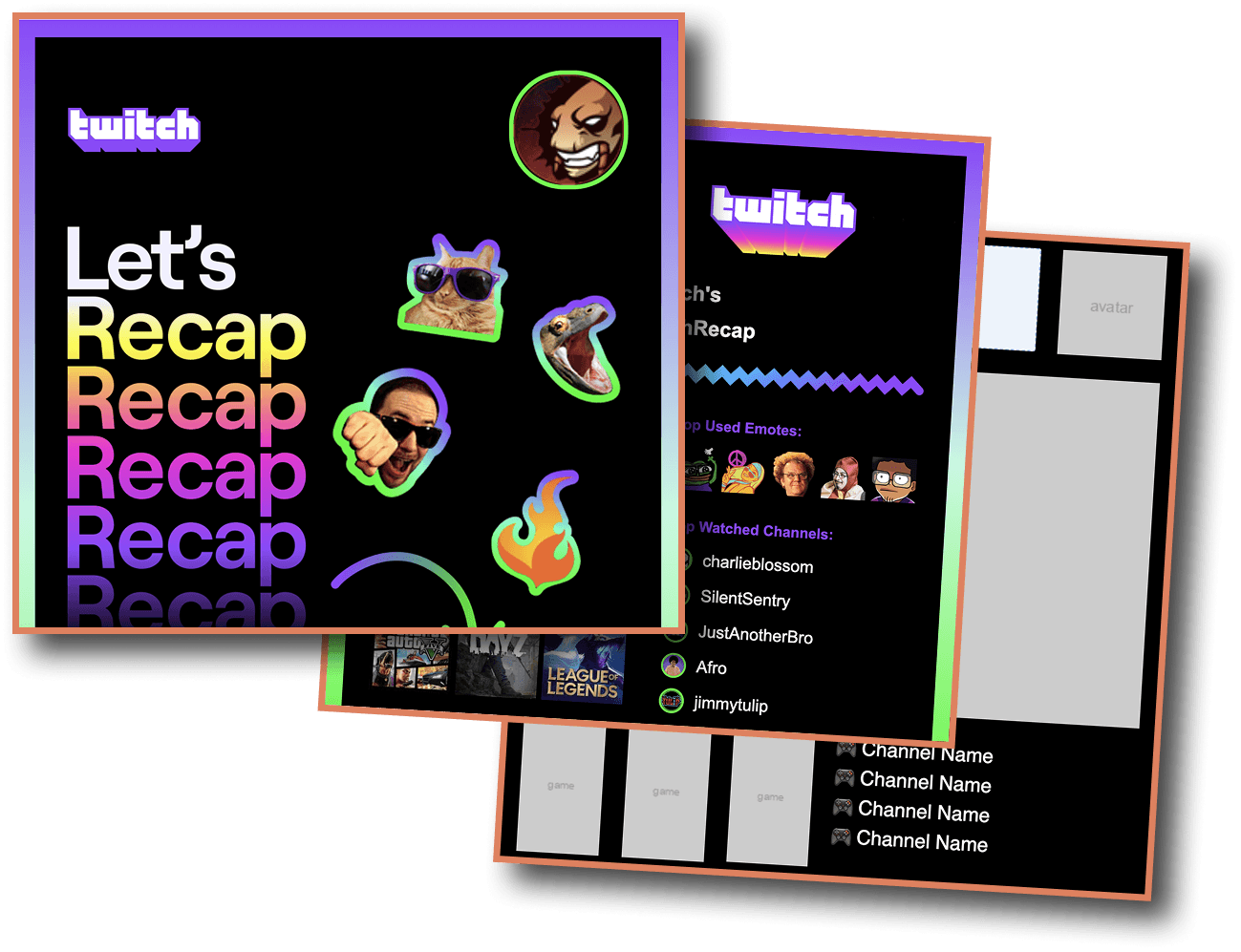
One of the biggest moments for this work was a campaign that highlighted each user’s yearly activity on Twitch. Using platform data, we created personalized emails that reflected each user’s behavior, including their top channels, categories, and overall engagement.
These emails reached millions of viewers and streamers across Twitch’s global audience and were widely shared, making it the largest scale project I have worked on.
More importantly, the system we built continued to support future campaigns, giving the team a reliable way to create personalized, data-driven emails without starting from scratch each time.
Reflection
This project shifted how I think about building.
Instead of focusing on output, I focused on creating systems that support teams and scale over time. It also reinforced the importance of working closely across design, engineering, and marketing to make sure ideas are both effective and practical.
For me, the value was not just in the emails themselves, but in building something that made the team more efficient and confident in how they worked.
Built a modular email system using reusable components in Stripo, enabling non-technical teams to create personalized, data-driven campaigns at scale with the help of Moveable Ink.
Context and Goal
At the time, Twitch’s email efforts were mostly static and limited in how much they could reflect each user’s experience on the platform. The Growth team wanted to explore how email could become a more engaging and personalized channel.
I was brought in to help create more visually engaging emails alongside a designer. That worked initially, but as more campaigns and stakeholders got involved, it became clear that the process would not scale.
The goal shifted from simply building better emails to creating a system that could:
Support personalized, data-driven content
Scale across multiple campaigns and teams
Reduce reliance on engineering for every new request
Process
1. Moving Beyond One-Off Builds
Early on, emails were built individually, which created bottlenecks around development and testing. Even with frameworks I had experience with, the process still depended heavily on engineering support.
I started to focus less on individual execution and more on how we could create a repeatable system.
2. Implementing a Modular System in Stripo
We explored different tools and landed on Stripo as a flexible email builder. Within that, I built a set of reusable components that could be used across campaigns.
These components were designed to:
Stay consistent across different email types
Support both light and dark mode for flexibility
Work with internal tracking links and analytics requirements
Integrate with Moveable Ink for dynamic, user-specific content
The goal was to create a foundation that balanced consistency with flexibility.
3. Thinking Through Data and Personalization
A big part of the project was figuring out how to use Twitch data in a way that actually felt meaningful.
I worked with the Growth team to explore what types of data we could surface in emails, including:
Viewing behavior
Favorite channels and categories
Watch time and engagement patterns