
Exploring Positioning Through Design and No-Code Development
asthtiks(Aesthetics) started as an idea I had been circling for a while. I had spent time helping nonprofits and small organizations, and I wanted to create something more intentional around that work. The name itself is new, but it represents a longer thread of experience where I was trying to support smaller teams that needed clarity, not just a website.
At the same time, I wanted to push myself to learn a new tool. I chose Framer because of how quickly it allows you to go from idea to a live site, without the overhead that usually comes with building a traditional marketing site.
This project became a way to explore both tooling and messaging at the same time.
Context and Goal
I was not starting with a client. The goal was to:
Learn Framer in a real-world scenario
Explore how I talk about my work and the value I can provide
Build something that could eventually serve as a foundation for working with small businesses
More than anything, I wanted to get out of my head and into something tangible.
Process
1. Starting Without Clear Positioning
I began with a rough idea of offering web and design services, but the messaging was too broad. Early versions of the site felt generic and didn’t reflect how I actually think about the work.
Instead of trying to get it perfect upfront, I treated the site as something I could iterate on quickly.
2. Learning Through Building in Framer
Using Framer shifted how I approached building on a no-code platform:
I could design and develop at the same time without switching contexts
I was able to move quickly and test ideas without worrying about setup or infrastructure
It encouraged me to focus more on layout, flow, and messaging rather than code
For me, this felt closer to how I naturally like to work, especially for smaller projects.
3. Iterating on Messaging
The biggest challenge was not the build itself, but figuring out how to talk about what I do in a way that sounded clear and created trust. Over the years I spent a lot of time telling non technical people & friends "I build out websites" - this did not actually tell my story or the nuances that comes with Product, UX, UI, and where my work fits.
I went through multiple versions of the homepage, rewriting and restructuring the content to better reflect:
My focus on clarity and positioning
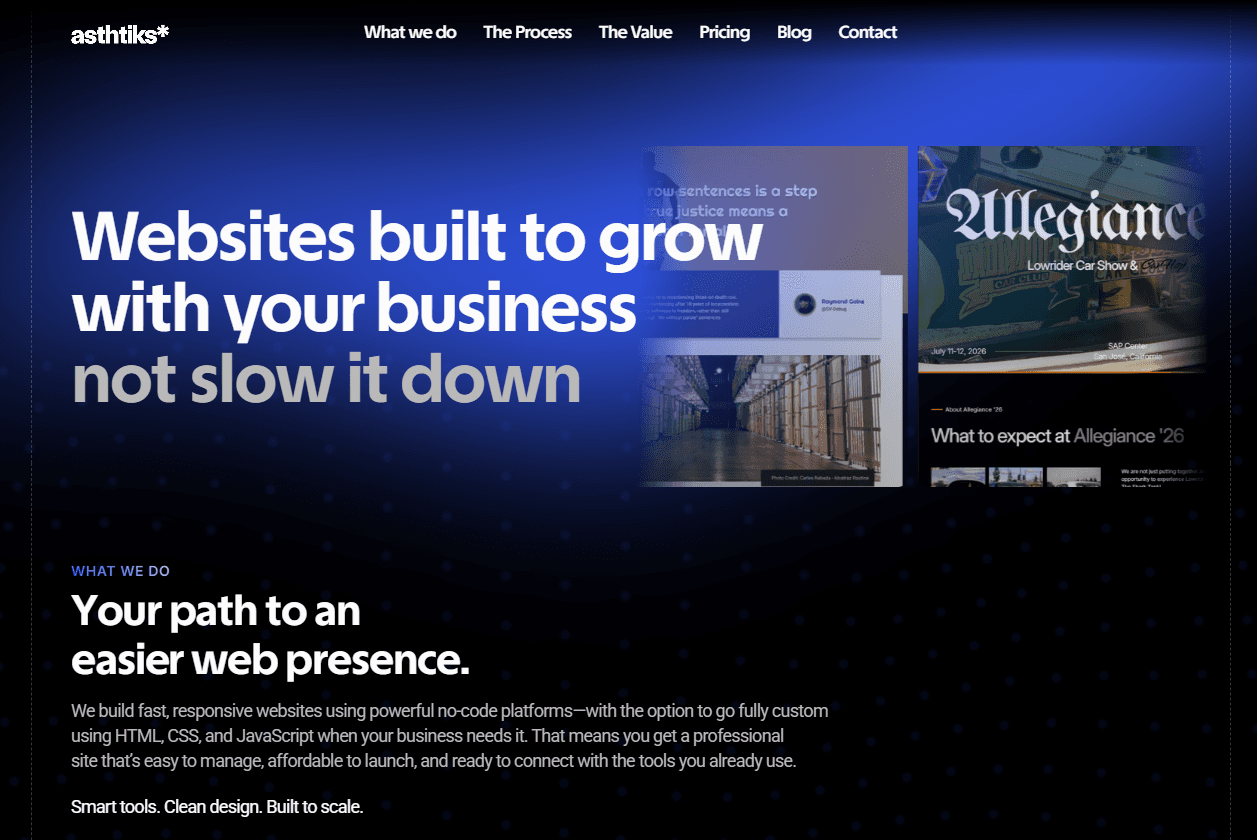
The idea of websites as tools for growth, not just visuals
How I blend design thinking with the frontend experience
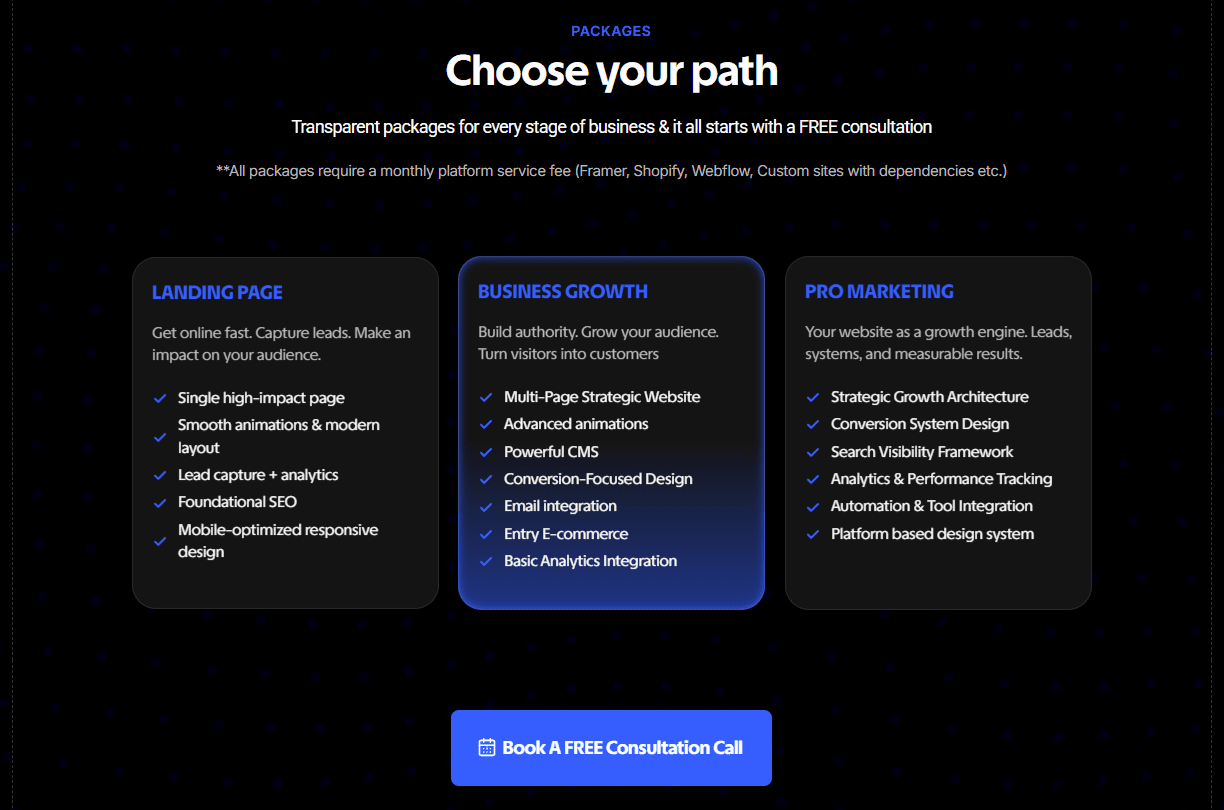
This part was less about design and more about being honest about what I actually offer. I wanted people to know that I partner with them, I want to help them reach success with not only visuals but helping them think in systems to be more efficient.
4. Designing for Simplicity
I kept the design intentionally simple:
Clean typography and spacing
Focused sections without too much noise
A structure that guides someone quickly through what I do
The goal was to make the message clear without overdesigning.
Outcome
The site is live, but more importantly, it represents a shift in how I approach my work.
I now have a clearer way of talking about what I do
I gained hands-on experience with Framer as a tool for fast iteration
I built something that I can continue to refine as I start working with clients
I have not yet pulished work with a client under asthtiks, but that was not the only goal. This project helped me build confidence in both my process and how I present my work.
Reflection
This project reminded me that clarity comes from doing, not just thinking.
Instead of waiting until everything felt figured out, I used the site as a way to explore:
How I want to position myself
What kind of work I want to attract
How I can move faster without overcomplicating the build
It is still evolving, but it already serves as a strong foundation for what comes next. I have been focusing on subtle animation, timing and page loads as I continue to think about the overall experience on the site.
asthtiks(Aesthetics) started as an idea I had been circling for a while. I had spent time helping nonprofits and small organizations, and I wanted to create something more intentional around that work. The name itself is new, but it represents a longer thread of experience where I was trying to support smaller teams that needed clarity, not just a website.
At the same time, I wanted to push myself to learn a new tool. I chose Framer because of how quickly it allows you to go from idea to a live site, without the overhead that usually comes with building a traditional marketing site.
This project became a way to explore both tooling and messaging at the same time.
Context and Goal
I was not starting with a client. The goal was to:
Learn Framer in a real-world scenario
Explore how I talk about my work and the value I can provide
Build something that could eventually serve as a foundation for working with small businesses
More than anything, I wanted to get out of my head and into something tangible.
Process
1. Starting Without Clear Positioning
I began with a rough idea of offering web and design services, but the messaging was too broad. Early versions of the site felt generic and didn’t reflect how I actually think about the work.
Instead of trying to get it perfect upfront, I treated the site as something I could iterate on quickly.
2. Learning Through Building in Framer
Using Framer shifted how I approached building on a no-code platform:
I could design and develop at the same time without switching contexts
I was able to move quickly and test ideas without worrying about setup or infrastructure
It encouraged me to focus more on layout, flow, and messaging rather than code
For me, this felt closer to how I naturally like to work, especially for smaller projects.
3. Iterating on Messaging
The biggest challenge was not the build itself, but figuring out how to talk about what I do in a way that sounded clear and created trust. Over the years I spent a lot of time telling non technical people & friends "I build out websites" - this did not actually tell my story or the nuances that comes with Product, UX, UI, and where my work fits.
I went through multiple versions of the homepage, rewriting and restructuring the content to better reflect:
My focus on clarity and positioning
The idea of websites as tools for growth, not just visuals
How I blend design thinking with the frontend experience
This part was less about design and more about being honest about what I actually offer. I wanted people to know that I partner with them, I want to help them reach success with not only visuals but helping them think in systems to be more efficient.
4. Designing for Simplicity
I kept the design intentionally simple:
Clean typography and spacing
Focused sections without too much noise
A structure that guides someone quickly through what I do
The goal was to make the message clear without overdesigning.
Outcome
The site is live, but more importantly, it represents a shift in how I approach my work.
I now have a clearer way of talking about what I do
I gained hands-on experience with Framer as a tool for fast iteration
I built something that I can continue to refine as I start working with clients
I have not yet pulished work with a client under asthtiks, but that was not the only goal. This project helped me build confidence in both my process and how I present my work.
Reflection
This project reminded me that clarity comes from doing, not just thinking.
Instead of waiting until everything felt figured out, I used the site as a way to explore:
How I want to position myself
What kind of work I want to attract
How I can move faster without overcomplicating the build